Friday, June 10, 2011

The Threat From European E. Coli


The deadly outbreak of European E. coli has produced great distressed on people all over the world as well as to those medical personnel in lab coats and nursing scrubs. Even the World Health Organization (WHO) said that this European E- coli is a unique strain that has never been isolated from patients before. The new strain has “various characteristics that make it more virulent and toxin-producing” than the many E. coli strains people naturally carry in their intestines. Let me give you an excerpt of the news that I got from healtzone.ca.


Researchers have so far been unable to pinpoint the cause of the illness, which has now spread to at least 10 European countries and fanned uncertainty about eating tomatoes, cucumbers and lettuce. The strain has sickened more than 1,500 people, including 470 who have developed a rare kidney failure complication, and killed 18 — most of them in Germany, the country hardest hit.

However, scientists and other people that are usually wearing nursing scrubs and lab coats made a way to know more about this E. coli strain.

Scientists sequencing the bacteria strains found in the outbreak said it was caused by “an entirely new super-toxic E. Coli strain” that several antibiotic resistant genes, according to a statement from the Shenzhen, China-based laboratory, BGI. The researchers were working together with scientists from the University Medical Center Hamburg-Eppendorf.
Hilde Kruse, a food safety expert at WHO said it’s not uncommon for bacteria to continually mutate, evolving and swapping genes. It is difficult to explain where the new strain came from, she said, but said strains of bacteria from both humans and animals easily trade genes, similar to how animal viruses like Ebola sometimes jump into humans.
Previous E. Coli outbreaks have mainly hit children and the elderly, but the European outbreak is disproportionately affecting adults, especially women. Kruse said there might be something particular about the bacteria strain that makes it more dangerous for adults.
The outbreak is already considered the third-largest involving E. coli in recent world history, and it may be the deadliest. Twelve people died in a 1996 Japanese outbreak that reportedly sickened more than 9,000, and seven died in a 2000 Canadian outbreak.


The effect...
Fearful of the outbreak spreading east to Russia, the country extended a ban on vegetables to the entire European Union from just Germany and Spain, a move the bloc quickly called disproportionate.
Recommendation...

The WHO recommends that to avoid food-borne illnesses people wash their hands before eating or cooking food, separating raw and cooked meat from other foods, thoroughly cooking food, and washing fruits and vegetables, especially if eaten raw. Experts also recommend peeling raw fruits and vegetables if possible.


Wednesday, May 18, 2011

A Glimpse of Best Children's Hospital in US


Here is the list of the America’s Best Children’s Hospital in accordance with U.S. News & World Report. The criteria was not based on how many doctors they have in the hospital, nor children patients, nor how hi-tech are their medical instruments, medical equipments and tuning fork but Best Children's Hospitals focuses on medical centers whose young patients come with cancer, cystic fibrosis, defective hearts, and other life-threatening, rare, or demanding conditions. The rankings showcase the top 50 children's centers—20 more than last year—in each of 10 specialties: cancer, cardiology and heart surgery, diabetes and endocrinology, gastroenterology, neonatology, nephrology, neurology and neurosurgery, orthopedics, pulmonology, and urology.

Children's Hospital Boston
The hospital with a 396-licensed bed children's hospital in the Longwood Medical and Academic Area of Boston, Massachusetts. Children's was the first stand-alone pediatric hospital in New England to be awarded Magnet status by the American Nurses Credentialing Center. One of the largest pediatric medical centers in the United States,Children's offers a complete range of health care services for children from birth through 21 years of age. Its Advanced Fetal Care Center can begin interventions at 15 weeks gestation, and in some situations (e.g., congenital heart disease and strabismus) Children's treats adults. Children's Hospital scientist Dr. John Enders and his team were first to successfully culture the polio virus and were awarded the Nobel Prize in Physiology or Medicine in 1954.Dr. Joseph Murray, chief plastic surgeon at Children's Hospital Boston from 1972-1985 was awarded the Nobel Prize in Physiology or Medicine in 1990 for his research on immunosuppression.

Children's Hospital of Philadelphia

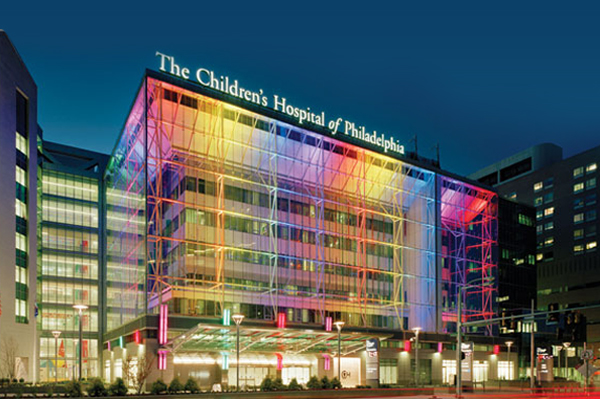
The Children's Hospital of Philadelphia (CHOP) is one of the largest and oldest children's hospitals in the world. CHOP has been ranked as the best children's hospital in the United States by U.S. News & World Report and Parents Magazine in recent years. As of 2008, it was ranked #1 in the nation for paediatrics. Each year the hospital admits more than 15,000 children and more than 600,000 are seen in the emergency and outpatient departments.

Cincinnati Children's Hospital Medical Center

Cincinnati Children's Hospital Medical Center (CCHMC) is a 523-bed pediatric hospital located in Cincinnati, Ohio. It is home to the country's busiest pediatric emergency department, performs the second largest number of surgical procedures at a children's hospital in the nation, and is southwest Ohio's only Level 1 pediatric trauma center. Cincinnati Children's receives the second-most NIH funds of any pediatric institution in the United States. The pediatric residency training program at CCHMC is among the largest in the world, training approximately 130 graduate physicians each year. Cincinnati Children's is home to a large neonatology department that oversees newborn nurseries at local hospitals and the medical center's own 59-bed Level III Regional Center for Newborn Intensive Care.American Hospital Association-McKesson Quest for Quality Prize for its leadership in improving outcomes through family-centered care and a dedication to transparency (2006).

Texas Children's Hospital, Houston

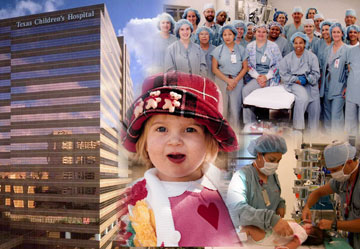
Texas Children's Hospital is a pediatric hospital located in the Texas Medical Center in Houston, Texas. With 639 licensed beds and 465 beds in operation, Texas Children's is the largest children's hospital in the United States and is affiliated with the Baylor College of Medicine as that institution's primary pediatric training site. Texas Children's has garnered widespread recognition for its expertise and breakthrough developments in the treatment of pediatric cancer, diabetes, asthma, HIV, premature birth, attention-related disorders, organ transplants and cardiogenic disorders. More than 42 pediatric subspecialties are available to patients at Texas Children's. The hospital's medical staff includes more than 1,580 board-certified, primary-care physicians, pediatric subspecialists, pediatric surgeons and dentists. In 2003, Texas Children's more than 1,000 nurses achieved national Magnet Recognition, one of the highest honors in nursing.

Children's Hospital Colorado, Denver

The Children’s Hospital is a nationally-ranked, nonprofit hospital for children located in Colorado. For more than a decade, U.S. News & World Report has recognized The Children's Hospital as one of the nation's top 10 children’s hospitals. The Children’s Hospital ranked seventh (7th) in the magazine's “America’s Best Children’s Hospitals” issue published in May 2008. The Children’s Hospital was awarded Magnet nursing status in 2005. The Magnet Nursing Services Recognition Program was established in 1993 to recognize healthcare organizations that provide the very best in nursing care. Out of 100 children’s hospitals in the nation, The Children’s Hospital ranked 10th for overall care; 2nd in pulmonary care; 7th in ER care; and 9th in orthopedic care.

Johns Hopkins Children's Center, Baltimore

Opened in 1912 as The Harriet Lane Home for Invalid Children, the nation’s first pediatric hospital affiliated with an academic research institution, Johns Hopkins. Baltimore banker Henry Johnston and his wife Harriet Lane bequeathed our founding funds in memory of their sons, who died in childhood from rheumatic fever. By 1930, their clinicians had discovered that sulfa drugs can prevent its fatal cardiac devastation. According from them, "for nearly a century now, we’ve been pushing the boundaries of American pediatric medicine and developing world-class care for the sickest children and their families. Visit here often for more about our revolutionary brand of medicine and the dedication, innovation and brilliance..."


Wednesday, April 27, 2011

Doctors: Where Life and Death Lies

Even doctors wearing medical apparel especially white scrubs can't deny the fact that there are cases that they can't control the death of an individual. In their humble hands, patients can live or die, and yet too many situations had shown them that living and dying is beyond their power and control.

From: The Hands Where Life and Death Lies

Doctors were given the full responsibility within their patients’ health. No wonder that when their patients’ health had improved, it is the doctor in charge who is claimed as responsible to it. However, when their patients die, the doctor will always be blamed. This entails the fact that when it comes to patient’s life, the physician will be held accountable at all times.

The truth is, in this world, there really exists good and bad doctors. Here in this post, I got some excerpt of the latest news about good doctors and bad physicians. Check this out:

BAD DOCTORS

Philadelphia Abortion Doctor Accused of Killing Babies With Scissors, Charged With 8 Murders

An abortion doctor in Philadelphia has been charged with eight murders, including seven babies who prosecutors say were born alive then killed with scissors. Dr. Kermit Gosnell, 69, and nine employees from his West Philadelphia Women's Medical Society were arrested Wednesday. He and his staff also are charged with killing a woman who was given a lethal dose of Demerol. Gosnell catered to minorities, immigrants and poor women, and made millions of dollars over 30 years performing illegal and late-term abortions in squalid and barbaric conditions, prosecutors said. "There were bags, and bottles holding aborted fetuses were scattered throughout the building," said Philadelphia District Attorney Seth Williams. "There were jars lining shelves with severed feet that he kept for no medical purpose."

Polish medics accused of killing patients and selling the corpses to undertakers

A court in Lodz was told last week that a number of ambulance drivers, with the full co-operation of some doctors, allegedly injected patients with the muscle relaxant Pavulon to hasten their deaths. The drivers would not even take patients to the geriatric ward, but whisk them straight to the undertakers. Andrzej Nowocien, a paramedic, is charged with the murder of four people while his colleague, Karol Banas, is charged with murdering one patient. Janusz Kuklinski, a doctor, faces 10 charges of manslaughter and Pawel Wasilewski, also a doctor, faces four charges of manslaughter. He is further accused of illegally supplying information on people's deaths on more than 200 occasions to undertakers. All have pleaded not guilty. Nowocien told the trial: "On one occasion we were to transport a severely ill patient from Lodz, in central Poland, to a nearby hospital in Glowno.”We figured there was little sense in travelling all the way to Glowno because the patient was about to die any minute anyway. So we headed straight for the undertakers instead, knowing the problem would solve itself on the way. We passed on the woman's corpse to the funeral home."

GOOD DOCTORS

The List of Good and Bad Doctors


Monday, April 11, 2011

The Risk of Electronic Hands-Free Faucets at Hospitals

“We were surprised by the initially high bacterial counts.”
Study results showed Legionella bacteria levels between 0 and 3,000 bacterial colony forming units per milliliter of water from newly installed, electronic hands-free faucets at The Johns Hopkins Hospital, which is in fact all equipped with the latest electronic-eye sensors to automatically detect hands and dispense preset amounts of water. The study further shows that these faucets were more likely to be contaminated with one of the most common and hazardous bacteria in hospitals compared to old-style fixtures with separate handles for hot and cold water.


What is Legionella bacteria, anyway?

According to Mr. Wiki, Legionella acquired its name after a July, 1976 outbreak of a then-unknown "mystery disease" sickened 221 persons, causing 34 deaths. The outbreak was first noticed among people attending a convention of the American Legion – a congressionally chartered association of U.S. military veterans. Over 90% of legionellosis cases are caused by Legionella pneumophila, a ubiquitous aquatic organism that thrives in temperatures between 25 and 45 °C (77 and 113 °F), with an optimum around 35 °C (95 °F). It takes two distinct forms:

  • Legionnaires' disease, also known as "Legion Fever", is the more severe form of the infection and produces pneumonia.
  • Pontiac fever is caused by the same bacterium but produces a milder respiratory illness without pneumonia that resembles acute influenza.
For more info, read this article ; Hands-Free Electronic Water Faucets Found to be a Hindrance in Hospital Infection Control or look for the nearest doctors in scrub uniforms near your place.